
Key Takeaways
- About one in four adults aged 65 and older falls each year, and falls are the leading cause of injury in this age group.
- Most falls are preventable, and balance and strength training is one of the best ways to lower the risk.
- Physical therapy builds strength, steadiness, and confidence, and can also make your home safer.
- In Mississippi, you do not need a referral to start physical therapy.
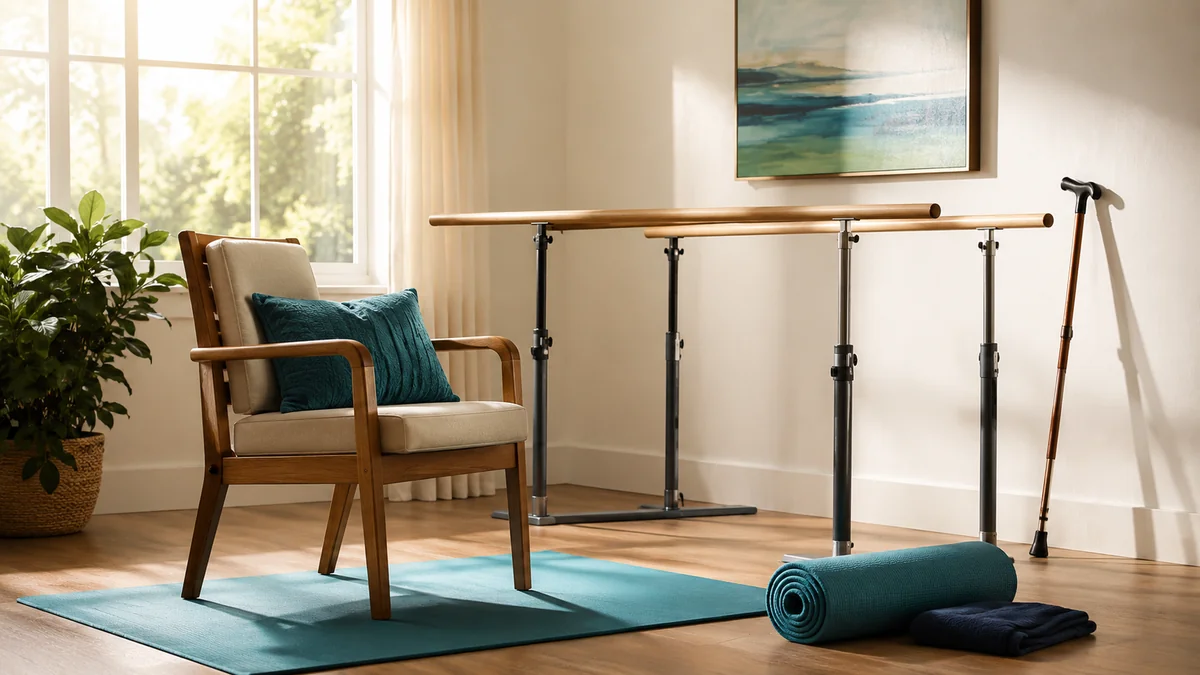
If getting up from a chair feels shakier than it used to, or you find yourself reaching for the wall on the way down the hall, your balance may be trying to tell you something, and it is worth listening. For older adults in Houston, MS, staying steady on your feet is one of the most important things you can do to keep your independence. At Houston Physical Therapy & Performance Center, we help seniors rebuild strength, steadiness, and confidence so a fall is far less likely. And in Mississippi, you do not need a referral to get started.
Why do falls become more common with age?
Falls become more common with age because the systems that keep us upright, our muscle strength, our sense of position, our vision, and our reaction time, all tend to decline gradually. None of this means a fall is inevitable, but it does mean the margin for error gets smaller, so small things like a rug edge or a dim hallway matter more.
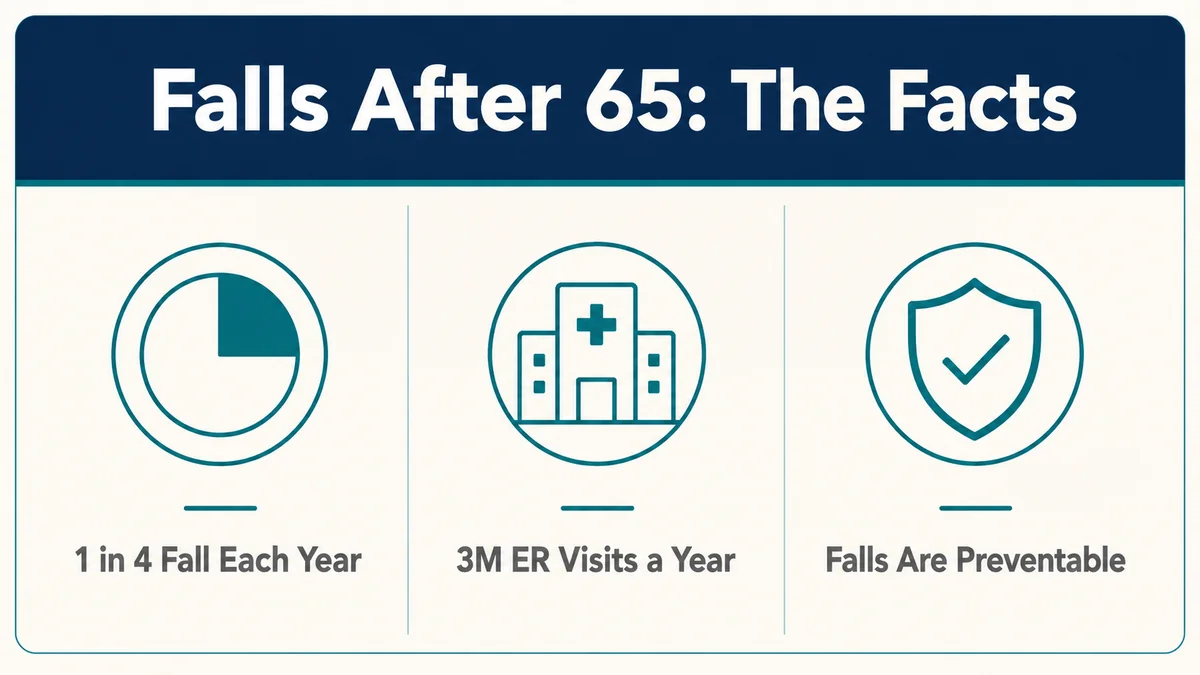
The numbers show how common this is. According to the Centers for Disease Control and Prevention, about one in four adults aged 65 and older falls each year, falls are the leading cause of injury in this age group, and older adult falls lead to roughly three million emergency department visits annually. The most important part, though, is that most of these falls are preventable, and that is exactly what balance and fall prevention therapy is designed to do.
There is one more reason to take unsteadiness seriously: falls tend to feed on themselves. A single fall, even a minor one, can shake your confidence and lead you to move less, which weakens muscles and makes the next fall more likely. Getting ahead of that cycle, ideally before a first fall, is the whole point of prevention, and it is never too early or too late to start.
What affects balance in older adults?
Balance is a team effort between your muscles, your inner ear, your vision, and your nervous system, and a fall usually happens when more than one of these is off. Understanding your particular mix of risk factors is what lets us target the right ones.
- Muscle weakness: especially in the legs and core, which makes it harder to catch yourself.
- Inner-ear and vision changes: that blur the signals your brain uses to stay oriented.
- Certain medications: that can cause dizziness, drowsiness, or a drop in blood pressure when you stand.
- Joint pain and stiffness: from conditions like arthritis that change how you move and bear weight.
- Home hazards and footwear: loose rugs, poor lighting, clutter, and unsupportive shoes.
A physical therapist screens across all of these, then focuses on the ones you can change. It is common for several small risk factors to add up rather than one big one. A little less leg strength, a slightly slower reaction, a new medication, and a dim hallway may each be minor on their own, yet together they tip the balance. The encouraging flip side is that improving even a few of them meaningfully lowers your overall risk, which is why a broad, personalized approach works so well. If joint pain is part of your picture, our guide on hip pain physical therapy explains how easing pain and rebuilding strength also helps you move more confidently.
How does physical therapy improve balance and prevent falls?
Physical therapy improves balance by strengthening the muscles that keep you upright, retraining the reflexes that catch you when you stumble, and gradually building your confidence to move. It starts with an assessment of your strength, steadiness, walking pattern, and fall history, then a plan built around your specific needs.
The results are well supported. The United States Preventive Services Task Force recommends exercise to prevent falls in older adults at increased risk, and structured balance and strength programs have been shown to lower fall risk by roughly a third. That is a large difference for something as straightforward as guided, consistent movement.
Just as important, therapy rebuilds confidence. Many older adults start limiting activity because they are afraid of falling, which weakens muscles further and, ironically, raises the risk. Breaking that cycle, by proving to yourself that you can move safely, is one of the most valuable parts of the process.
Some balance problems also start in the inner ear, causing dizziness or vertigo, and these respond to a specialized approach called vestibular rehabilitation. If your unsteadiness comes with spinning, lightheadedness, or a sense that the room is moving, that is worth mentioning at your evaluation, because the exercises that calm those symptoms are different from general balance training.
What balance exercises help reduce fall risk?
The most effective fall prevention exercises combine leg strengthening with balance challenges that gently push your limits under safe supervision. Done consistently, they improve both your stability and your ability to recover when you do lose your footing. The best programs also practice the specific situations that trip people up, such as turning, reaching, stepping over an obstacle, or getting up and down from the floor, so your steadiness carries over into real life rather than staying stuck in the exercise room.
- Sit-to-stand repetitions: rising from a chair without using your hands to build leg strength and everyday confidence.
- Standing balance holds: narrowing your stance or standing on one leg near a counter to challenge steadiness.
- Heel-to-toe walking: practicing a controlled, deliberate step pattern to sharpen coordination.
- Weight shifts and step training: reacting to gentle challenges so your body relearns how to catch itself.
The key is that balance training has to be challenging enough to work, which is why supervision matters early on. A therapist knows how to push your balance just to its edge while keeping you safe, then progress the difficulty as you improve. Always have a sturdy support within reach when practicing at home.
Consistency matters more than intensity here. Balance is a skill, and like any skill it fades without practice and sharpens with it. A little each day, woven into things you already do, such as standing on one foot while brushing your teeth near the counter, adds up to real, lasting steadiness over the weeks and months.
How can you make your home safer from falls?
Because so many falls happen at home, small changes there can make a big difference. The goal is to remove the everyday hazards that turn a stumble into a fall, and most of them are quick and inexpensive to fix.
- Remove or secure loose rugs and clear clutter from walkways and stairs.
- Improve lighting, especially on stairs and along the path to the bathroom at night.
- Add grab bars in the bathroom and sturdy handrails on both sides of stairs.
- Wear supportive, non-slip shoes instead of socks or loose slippers.
As part of a fall prevention program, we can help you spot these hazards and suggest practical fixes, alongside the strength and balance work that addresses the root of the problem.
It is also worth having a plan for getting up safely if a fall does happen, and keeping a phone or alert device within reach. Reviewing your medications with your doctor or pharmacist helps too, since some combinations increase dizziness and unsteadiness. Small, practical steps like these work hand in hand with the strength and balance training to keep you safe and independent at home.
Do you need a referral for balance therapy in Mississippi?
No. Mississippi direct access laws let you see a physical therapist without a physician referral, so you can call us and start. If your insurance requires a referral, we help you navigate it, and we verify your benefits before you begin so there are no surprises.
Not sure whether it is time to get help with your balance? Our guide on when to see a physical therapist can help you decide, and if you are new to therapy, our overview of what to expect at your first visit walks through exactly how an evaluation works.
Frequently asked questions
Can physical therapy really reduce my risk of falling?
Yes. Research shows that structured balance and strength exercise can meaningfully lower fall risk in older adults, by roughly a third in some programs. A physical therapist builds a plan matched to your balance, strength, and confidence.
What are the warning signs that my balance is getting worse?
Common signs include holding onto furniture or walls to move around, feeling unsteady on stairs or uneven ground, near-falls, dizziness when you stand, and a growing fear of falling. Any of these is a good reason to get evaluated.
At what age should I start fall prevention exercises?
There is no single age, but falls become more common after 65, so it is wise to act at the first sign of unsteadiness rather than waiting for a fall. Building strength and balance earlier makes them easier to keep.
Are balance exercises safe to do at home?
Many are, especially with a sturdy support nearby, but the safest approach is to start with guidance. A therapist makes sure you are challenging your balance enough to improve without putting you at risk.
Do I need a referral to see a physical therapist for balance in Mississippi?
No. Mississippi direct access laws let you see a PT without a physician referral. If your insurance requires one, we help you navigate it and verify your benefits before you begin.

Cass Tapley, PT
Cass Tapley, PT, is the owner and physical therapist at Houston Physical Therapy & Performance Center, the only locally owned, operated, and staffed physical and occupational therapy clinic in Houston, MS, serving Chickasaw County. Meet the team.
Want to feel steady on your feet again?
Call us today or visit any of our Chickasaw County locations. No referral is required in Mississippi.
Call (662) 456-1065Disclaimer: The content on this page is for informational purposes only and is not medical advice. Results vary by individual and are not guaranteed. Before starting any new treatment, exercise, or rehabilitation program, consult a licensed healthcare provider.