
Key Takeaways
- Physical therapy is the single most important part of recovering well after a knee replacement, and it often starts within hours of surgery.
- Most people resume normal daily activities within three to six weeks, with strength and comfort continuing to improve for up to a year.
- Therapy focuses on restoring your range of motion, rebuilding leg strength, and helping you walk normally again.
- In Mississippi, you do not need a referral to start physical therapy.
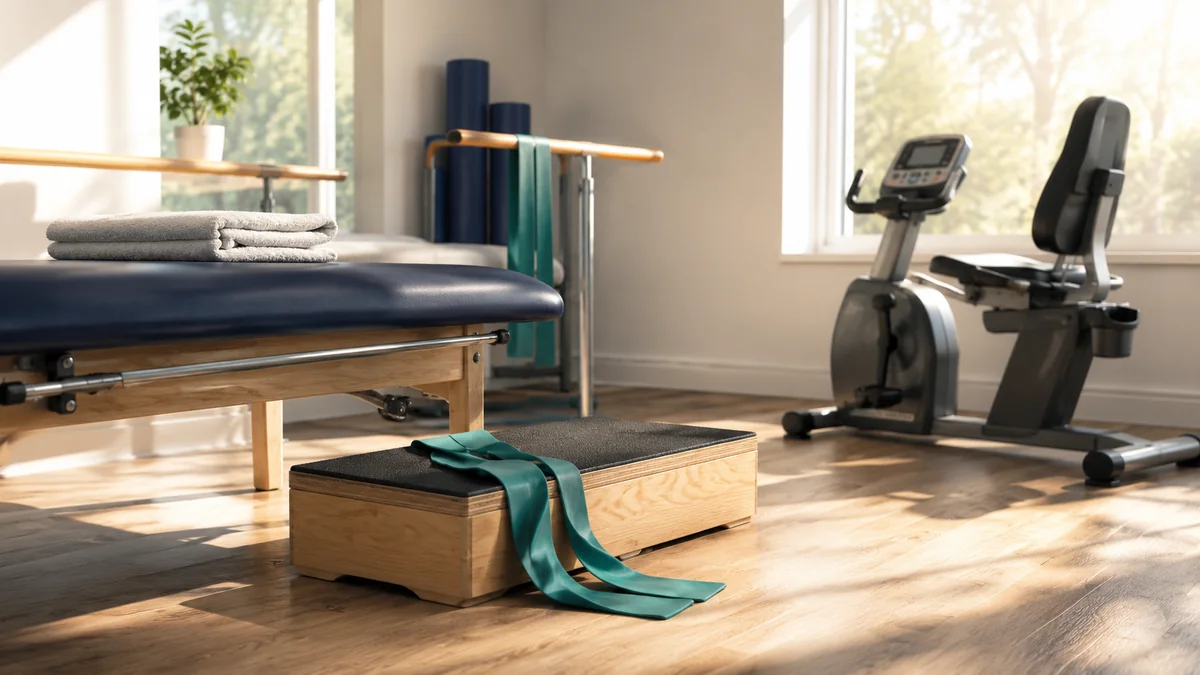
If you have a knee replacement coming up, or you are already home and wondering what recovery really looks like, the honest answer is that the surgery is only half the job. The other half is physical therapy after knee replacement, and in Houston, MS, it is what turns a new joint into a knee you can trust again. At Houston Physical Therapy & Performance Center, we guide you through every stage, from your first careful bends to walking, driving, and getting back to the things you love. And in Mississippi, you do not need a referral to begin.
Why is physical therapy so important after a knee replacement?
Physical therapy is important after a knee replacement because a new joint does not restore strength or motion on its own. It gives you the hardware, but your muscles have to relearn how to move, bend, and support your weight. Therapy is the guided, consistent work that turns a healing knee into a functional one.
Knee replacement is common and highly successful, which is exactly why doing the recovery well matters. According to the American Academy of Orthopaedic Surgeons, more than 700,000 total knee replacements are performed annually in the United States, and more than 90 percent of modern implants are still functioning well 15 years after surgery. The surgery gives you a durable new joint; physical therapy is what lets you actually use it.
Skipping or shortcutting therapy is where recoveries go sideways. Without early, steady movement, the knee can stiffen, scar tissue can limit how far it bends, and the surrounding muscles stay weak, all of which make walking harder and increase your fall risk. Good therapy prevents those setbacks while they are still easy to prevent.
How long does recovery take after a knee replacement?
Most people resume their normal daily activities within three to six weeks after a knee replacement, and many return to driving around four to six weeks. Regaining full strength and comfort is a longer road that can take up to a year, but the early weeks set the tone for the whole recovery.
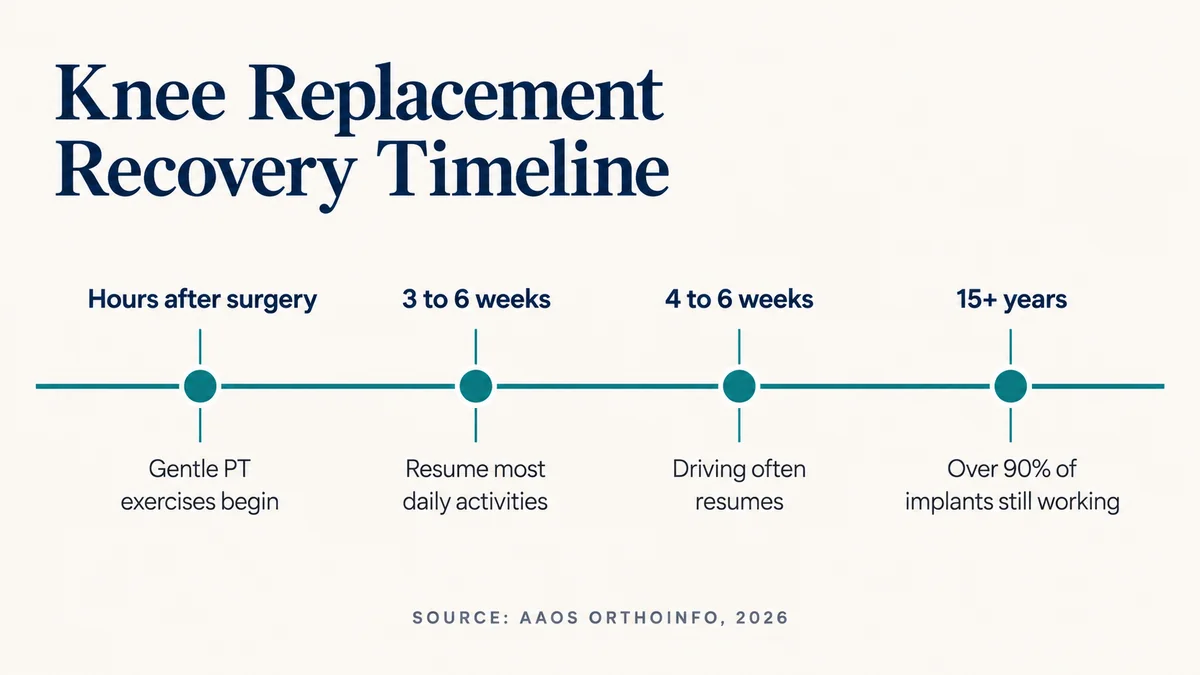
These are averages, not promises. Your age, your overall health, how strong your leg was before surgery, and how faithfully you do your exercises all shape your timeline. That is why we build your plan around you rather than a generic schedule, and why the daily home exercises between visits matter as much as the sessions themselves.
The first few weeks are the most important window. This is when the knee is most willing to regain its motion, so consistent, guided work early on tends to pay off for months afterward. Falling behind in this window is much harder to make up later, which is one more reason to start therapy promptly.
What does physical therapy after knee replacement involve?
Physical therapy after a knee replacement works through three connected goals: restoring how far your knee bends and straightens, rebuilding the strength of the muscles around it, and retraining you to walk and move normally. Your therapist blends all three and adjusts the balance as you heal.
- Restoring range of motion: gentle bending and straightening so the knee does not stiffen. An average of about 115 degrees of motion is generally anticipated, enough for stairs and getting in and out of a car.
- Rebuilding strength: targeted exercises for the thigh, hip, and calf muscles that support and control the new joint.
- Retraining your gait: relearning a smooth, even walking pattern, often progressing from a walker to a cane to walking unaided.
- Managing swelling and pain: ice, elevation, and pacing so you can do the work without being overwhelmed by discomfort.
In the very early days, therapy may begin at the hospital or at home, then move to our clinic as you become more mobile. Throughout, your therapist checks your range and strength at each visit, so your program keeps pace with your progress instead of standing still. If balance and confidence on your feet are a concern, our guide on balance and fall prevention therapy explains how we keep you steady while you recover.
What exercises help you recover after a knee replacement?
The most effective early exercises are simple, low-impact movements that restore motion and wake up the muscles around the knee. They are not complicated, but doing them correctly and consistently is what makes the difference, which is why guidance matters in the first weeks.
- Ankle pumps: flexing your foot up and down to keep blood moving and reduce swelling and clot risk.
- Quad sets and straight-leg raises: reawakening the thigh muscles that stabilize the knee.
- Heel slides and knee bends: gradually restoring how far the knee flexes.
- Supported standing and short walks: gentle weight-bearing to rebuild confidence and a normal stride.
As you get stronger, your therapist adds step-ups, stationary cycling, and balance work to prepare you for real-life demands like stairs and uneven ground. The National Library of Medicine also emphasizes progressing exercises steadily under professional guidance rather than rushing, which protects the healing joint. Never push into sharp pain; a controlled stretch is productive, but pain that lingers afterward is a sign to ease back.
How can you get the best results from your recovery?
The patients who recover best tend to do the same handful of things well: they start early, stay consistent, and communicate honestly with their therapist. None of it is dramatic, but together these habits are what separate a good recovery from a frustrating one.
- Do your home exercises every day, not just on clinic days. The work between visits is where most progress happens.
- Time exercises around your pain relief so you can move through a fuller range comfortably.
- Use ice and elevation to control swelling, which otherwise limits motion.
- Tell your therapist about new pain, swelling, redness, or warmth so we can adjust or flag it early.
It also helps to be patient with the plateaus. Recovery is rarely a straight line, and a slow week does not undo your progress. Steady, guided effort over the weeks and months is what rebuilds a strong, dependable knee, and we are here to keep you moving in the right direction the whole way.
Do you need a referral for post-surgical PT in Mississippi?
No. Mississippi direct access laws let you see a physical therapist without a physician referral, so you can call us and get started. If your surgeon has a specific protocol, we follow it, and if your insurance requires a referral, we help you navigate it and verify your benefits before you begin so there are no surprises.
If you are new to therapy and unsure what the first appointment is like, our guide on what to expect at your first visit walks through the evaluation step by step. And if your knee pain is ongoing but you have not had surgery, our overview of knee pain physical therapy covers the non-surgical options that help many people.
Frequently asked questions
How soon after knee replacement should physical therapy start?
Very soon. Most patients can begin gentle knee exercises within hours of surgery, and consistent physical therapy in the first days and weeks is one of the biggest factors in a strong recovery. The sooner you get the knee moving safely, the better it tends to heal.
How long does it take to recover from a knee replacement?
Most people resume their normal daily activities within three to six weeks, and many return to driving around four to six weeks. Full recovery, including regaining strength and comfort, can take up to a year, and steady physical therapy is what carries you through it.
Is physical therapy after knee replacement painful?
You should expect some discomfort, especially early on, because restoring motion means gently pushing a healing joint. A good therapist works within a safe, tolerable range and times sessions around your pain relief so the work stays productive rather than overwhelming.
How much can I expect to bend my knee after surgery?
An average of about 115 degrees of motion is generally anticipated after a knee replacement, which is enough to climb stairs and get in and out of a car comfortably. Your therapist tracks your range at each visit and progresses your exercises toward that goal.
Do I need a referral for post-surgical physical therapy in Mississippi?
No. Mississippi direct access laws let you see a physical therapist without a physician referral. If your surgeon has a preferred protocol we follow it, and if your insurance requires a referral we help you navigate it and verify your benefits first.

Cass Tapley, PT
Cass Tapley, PT, is the owner and physical therapist at Houston Physical Therapy & Performance Center, the only locally owned, operated, and staffed physical and occupational therapy clinic in Houston, MS, serving Chickasaw County. Meet the team.
Recovering from knee surgery? Let us guide you.
Call us today or visit any of our Chickasaw County locations to start your knee replacement recovery. No referral is required in Mississippi.
Call (662) 456-1065Disclaimer: The content on this page is for informational purposes only and is not medical advice. Results vary by individual and are not guaranteed. Before starting any new treatment, exercise, or rehabilitation program, especially after surgery, consult a licensed healthcare provider.