
Key Takeaways
- Plantar fasciitis is an overload irritation of the tissue along the bottom of your foot.
- Physical therapy treats it with targeted stretching, strengthening, and hands-on care.
- Three simple at-home moves form the backbone of most recovery plans.
- In Mississippi, you do not need a referral to start physical therapy.
If the first steps out of bed each morning feel like a knife in your heel, you are probably dealing with plantar fasciitis. It is one of the most common causes of heel pain, and the good news is that physical therapy resolves most cases without injections or surgery. At Houston Physical Therapy & Performance Center in Houston, MS, we build a simple, guided plan that calms the pain and fixes what caused it. And in Mississippi, you do not need a referral to get started.
What is plantar fasciitis?
Plantar fasciitis is irritation of the plantar fascia, the thick band of tissue that runs along the bottom of your foot from the heel to the toes. When that tissue is overloaded, it develops tiny irritations that cause sharp heel pain, classically worst with your first steps in the morning or after sitting.
It usually builds from overload rather than a single injury: tight calves, long hours on hard floors, a sudden jump in activity, worn-out shoes, or changes in how your foot moves. Because it is a tissue-loading problem, the fix is to calm the irritation and gradually rebuild the tissue's tolerance, which is exactly what physical therapy does.
What causes plantar fasciitis?
Plantar fasciitis comes from too much load on the plantar fascia over time, not one bad step. The usual drivers are tight calf muscles, a sudden increase in walking or running, long hours standing on hard surfaces, unsupportive shoes, and foot mechanics like high arches or flat feet.
- Tight calves and Achilles tendons that pull on the heel.
- A quick jump in activity, like starting a new job on your feet or a running program.
- Long days standing on hard floors.
- Worn-out or unsupportive shoes.
- Foot mechanics such as very high or very flat arches.
Knowing your specific drivers is half the fix. A therapist looks at your calves, your foot mechanics, your footwear, and your daily load, then addresses the ones that apply to you so the pain does not simply come back.
How does physical therapy treat plantar fasciitis?
Physical therapy treats plantar fasciitis by reducing the pain, restoring flexibility, and rebuilding strength so the tissue can handle load again. That usually means targeted stretching of the calf and plantar fascia, progressive strengthening, hands-on manual therapy, and guidance on footwear and activity.
Early on, the goal is to settle symptoms. As pain eases, we progress you into strengthening so the fascia and the muscles around it can tolerate walking, standing, and sport without flaring again. This calm-it-then-build-it approach is why physical therapy tends to give longer-lasting relief than rest alone.
What are the best at-home exercises for plantar fasciitis?
Three simple moves form the backbone of most plantar fasciitis programs: a calf stretch, a toe and arch stretch, and eccentric calf raises. Done consistently, they improve flexibility and slowly rebuild the tissue's tolerance to load.
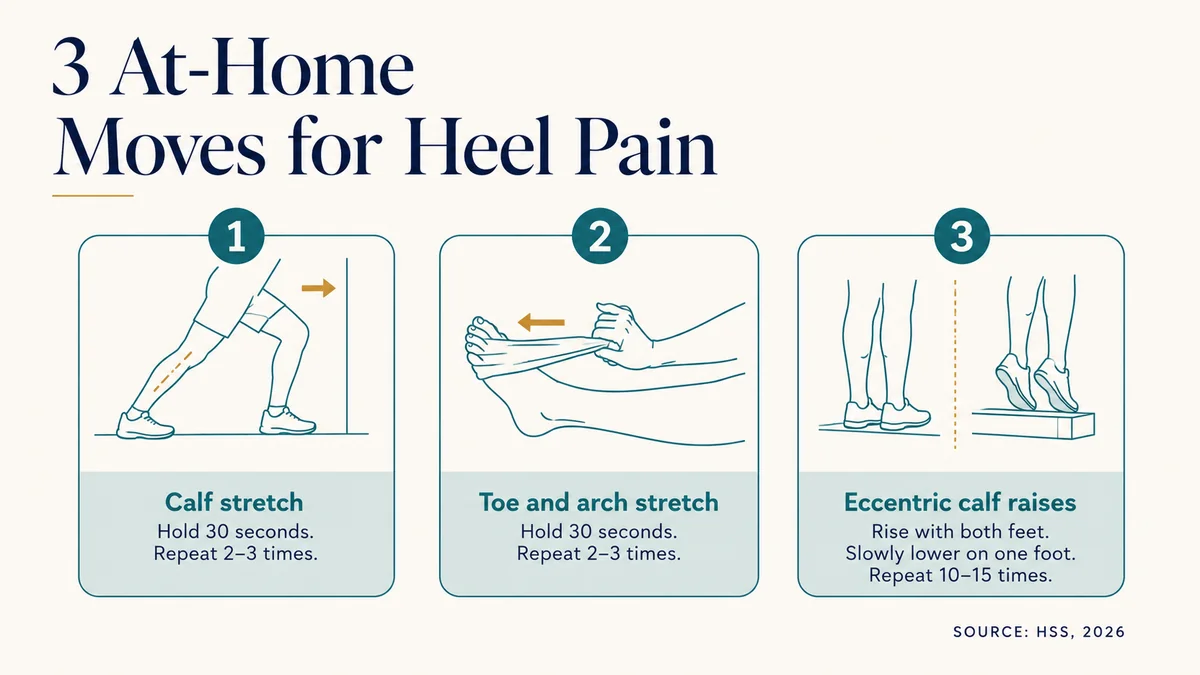
- Calf stretch: hold about 30 seconds and repeat 2 to 3 times to loosen the tight calf that pulls on the fascia.
- Toe and arch stretch: gently pull the toes back to stretch the plantar fascia, holding about 30 seconds.
- Eccentric calf raises: rise on both feet, then lower slowly on one, to load and strengthen the tissue.
A frozen water bottle rolled under the arch and supportive shoes help too. That said, a therapist tailors the plan to your foot and progresses it safely. According to the Hospital for Special Surgery, gentle, consistent stretching is one of the most effective first steps. What to skip is pushing through sharp pain, which keeps the irritation going.
How long does plantar fasciitis take to heal?
Most people improve within a few weeks to a few months with consistent care. Newer, milder cases often settle in about two to six weeks, while long-standing heel pain can take several months of steady work. The key is consistency, because the tissue rebuilds gradually.
That range is exactly why starting sooner helps. Early treatment, before the pain becomes a months-long habit, usually means a faster, smoother recovery. If your heel pain has lingered past a couple of weeks, it is worth getting it looked at.
Do you need a referral for plantar fasciitis therapy in Mississippi?
No. Mississippi direct access laws let you see a physical therapist without a physician referral, so you can call us and start. If your insurance requires a referral, we help you navigate it, and we verify your benefits before you begin.
Not sure it is time? Our guide on when to see a physical therapist can help, or read about our approach to sports injury recovery.
Frequently asked questions
What is the fastest way to relieve plantar fasciitis?
There is no instant fix, but calming the irritation while gently stretching and strengthening the foot and calf gives the fastest reliable progress. Supportive shoes, activity changes, and consistency matter more than any single trick.
Will plantar fasciitis go away on its own?
It sometimes eases with rest, but it often returns if the underlying overload is not addressed. Physical therapy targets the cause, which is why it tends to give longer-lasting relief than waiting it out.
How long does plantar fasciitis take to heal?
Many people improve in a few weeks, while long-standing cases can take a few months of consistent work. Starting sooner usually means a faster recovery.
Should I stop exercising with plantar fasciitis?
You usually do not have to stop entirely. A therapist helps you modify activity to stay active without flaring the pain, then rebuilds your tolerance over time.
Do I need a referral to see a physical therapist in Mississippi?
No. Mississippi direct access laws let you see a PT without a physician referral. If your insurance requires one, we help you navigate it.

Cass Tapley, PT
Cass Tapley, PT, is the owner and physical therapist at Houston Physical Therapy & Performance Center, the only locally owned, operated, and staffed physical and occupational therapy clinic in Houston, MS, serving Chickasaw County. Meet the team.
Heel pain slowing you down?
Call us today or visit any of our Chickasaw County locations. No referral is required in Mississippi.
Call (662) 456-1065Disclaimer: The content on this page is for informational purposes only and is not medical advice. Results vary by individual and are not guaranteed. Before starting any new treatment, exercise, or rehabilitation program, consult a licensed healthcare provider.