
Key Takeaways
- Sciatica is nerve pain, caused by irritation or compression of the sciatic nerve, that radiates from the lower back down the leg.
- Most cases improve in four to six weeks with conservative care like physical therapy, and most people recover without surgery.
- Gentle movement beats prolonged rest for most sciatica, while too much rest can slow recovery.
- Mississippi has direct access to PT, so you can start care without a doctor's referral.

That sharp, shooting pain that starts in your lower back and travels down one leg has a name: sciatica. For many people in Houston, MS, it shows up out of nowhere and makes sitting, standing, and sleeping harder than they should be. Sciatica physical therapy in Houston, MS works best when it targets the irritated nerve and the movement patterns around it, not just the pain. At Houston Physical Therapy & Performance Center, that is where every sciatica plan begins.
What is sciatica?
Sciatica is pain caused by irritation or compression of the sciatic nerve, the longest and widest nerve in the body. It usually starts in the lower back and radiates through the buttock and down the back of one leg, often with numbness, tingling, or a burning, electric-shock feeling.
According to the Cleveland Clinic, sciatica is one of the most common causes of leg pain seen in medical care, and most people recover with stretching, medication, or physical therapy. It typically affects one leg at a time.
The pain itself is a symptom, so the goal is to find what is pressing on or irritating the nerve. Common causes include:
- Herniated or degenerating disks a bulging disk can press directly on the nerve root in the lower back.
- Spinal stenosis and arthritis narrowing around the nerve or wear in the spine can crowd it.
- Strain, posture, and weak core support heavy lifting, long sitting, and weak trunk muscles raise the load on your lower back.
Can physical therapy help sciatica?
Yes. For most sciatica, physical therapy is an effective, low-risk way to calm the irritated nerve and get you moving again. It combines hands-on treatment with targeted exercise to reduce pressure on the nerve, restore motion, and build the core and hip strength that keeps symptoms from returning.
4-6 wks
Typical window for many cases to improve with conservative care (Cleveland Clinic)
Most
people recover without surgery, which is usually a last option
No referral
Mississippi direct access lets you start PT without a physician referral
Treatment usually blends manual therapy and nerve-mobility work to ease pressure with progressive strengthening for the core, hips, and lower back. As those muscles support the spine better, the nerve has more room and less to fight against.
How long does sciatica last?
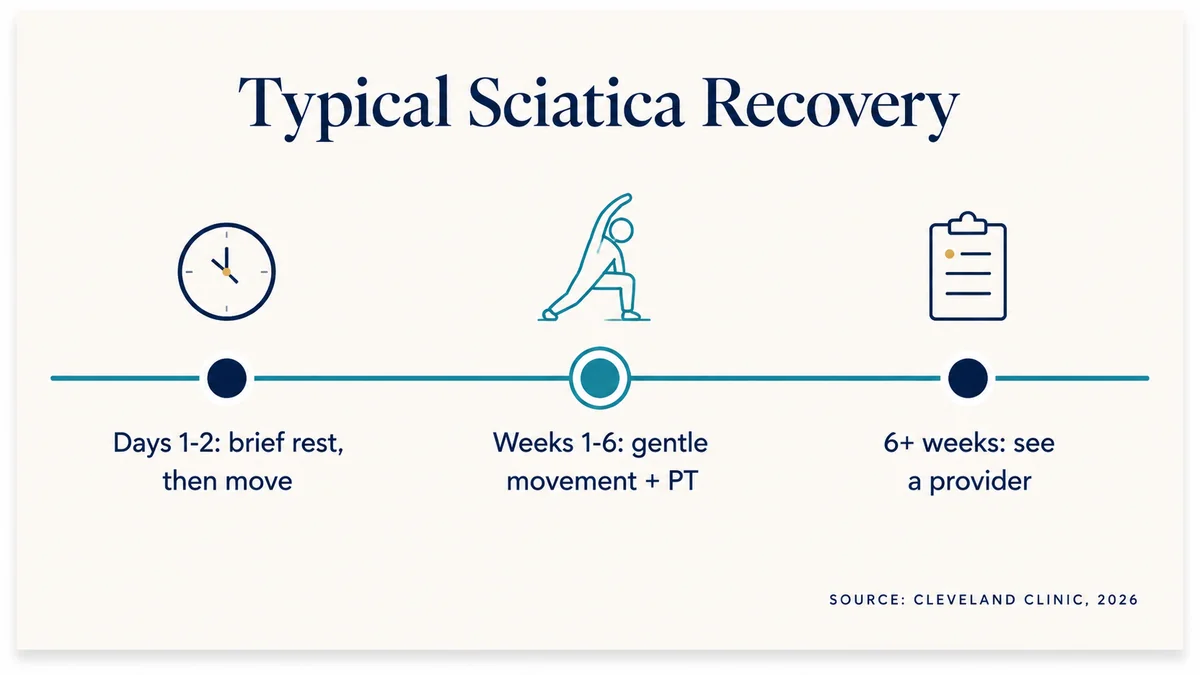
Many cases of sciatica improve within four to six weeks, and it often does not last longer than six weeks. More severe cases, or sciatica with significant nerve involvement, can take several weeks or months, so your therapist gives you a realistic timeline after the first evaluation.
Sessions usually run about 30 to 45 minutes, two to three times per week early on, then taper as your symptoms settle and you shift toward a home program you can keep up on your own. The aim is not just to quiet today's pain but to lower the odds it comes back.
No referral needed
Mississippi allows direct access to physical therapy, so you can start care for sciatica without a physician referral. If your insurance asks for one, we help you sort it out.
What does sciatica treatment involve?
A sciatica evaluation in Houston, MS looks beyond the sore spot. Your therapist watches how you move and walk, tests strength, and screens the nerve so the plan targets the real driver of your pain. From there, treatment is built around the movements that ease your symptoms.
Movement and nerve screen
A straight-leg raise test and gait check help pinpoint which nerve is involved.
Directional exercises
Specific motions that centralize symptoms and take pressure off the nerve.
Manual therapy
Hands-on work to ease stiffness and improve how the lower back moves.
Strength and home program
Core and hip strengthening you can continue to keep sciatica from returning.
Cleveland Clinic notes that common sciatica exercises include bridging, the cat-cow stretch, and knee-to-chest stretches, all of which a therapist can teach you to do safely. Our back and neck pain rehabilitation and orthopedic rehabilitation programs are built around exactly this kind of progressive, individualized care.
Should you rest or keep moving with sciatica?
For most sciatica, gentle movement is better than staying still. Short periods of rest may help during the first day or two, but too much rest tends to stiffen the area and slow recovery. Light, guided activity keeps you flexible and supports healing.
The trick is finding the right balance, which is where guided care helps. A therapist shows you which positions and motions calm your symptoms and which to ease off, so you stay active without flaring the nerve. If you are unsure whether your pain warrants a visit, our guide on when to see a physical therapist can help.
When does sciatica need urgent care?
Most sciatica is not dangerous and settles with conservative care. But certain symptoms point to nerve involvement that needs prompt medical attention rather than watchful waiting.
Seek prompt care if you have:
- Progressive muscle weakness, or foot drop that makes it hard to lift the front of your foot
- Loss of bladder or bowel control
- Severe pain after a fall or accident, or symptoms in both legs
If your sciatica also seems tied to a broader back problem, our guide to back pain physical therapy in Houston, MS explains how PT addresses the root cause.
Frequently asked questions
Do I need a referral for sciatica physical therapy in Mississippi?
No. Mississippi allows direct access to physical therapy, so you can call us and schedule for sciatica without a physician referral. If your insurance requires one, we help you navigate it.
How long does sciatica usually last?
Many cases improve within four to six weeks with conservative care, and sciatica often does not last longer than six weeks. More severe, nerve-related cases can take longer. Your therapist gives you a realistic timeline after your first evaluation.
Can physical therapy fix a pinched sciatic nerve?
Often, yes. Physical therapy can reduce the irritation and improve the mechanics behind many sciatica symptoms, and most people recover without surgery. If symptoms are severe or progressing, your therapist coordinates with your physician.
Should I rest or keep moving with sciatica?
Short periods of rest may help during the first day or two, but too much rest can make pain worse and slow recovery. Gentle, guided movement usually helps you stay flexible and supports healing.

Cass Tapley, PT
Owner and physical therapist at Houston Physical Therapy & Performance Center, the only locally owned, operated, and staffed PT and OT clinic in Houston, MS, serving Chickasaw County. Meet the team.
Get to the root of your sciatica.
Call us today or visit any of our Chickasaw County locations. Same-week appointments are available, and no referral is required.
Call (662) 456-1065Disclaimer: The content on this page is for informational purposes only and is not medical advice. Results vary by individual and are not guaranteed. Before starting any new treatment, diet, exercise, or supplement regimen, consult a licensed healthcare provider. Any testimonials reflect individual experiences and may not be typical.