
Key Takeaways
- Aquatic therapy is physical therapy done in warm water, where buoyancy takes weight off sore joints so you can move and strengthen with less pain.
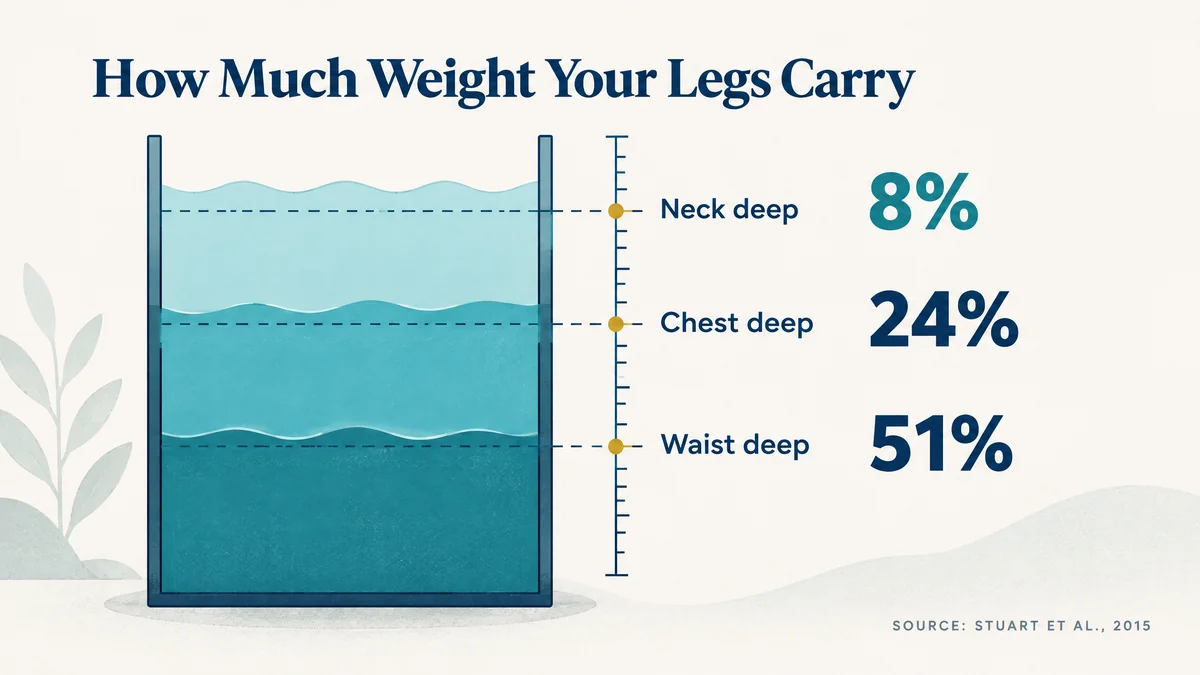
- In one study, people standing in water up to the navel carried about half of their body weight, and about 8% when the water reached the neck.
- Our clinic uses a HydroWorx EVO underwater treadmill with adjustable water depth, resistance jets, and massage jets.
- It is not for everyone. Open wounds, unhealed incisions, and some heart conditions mean waiting or choosing land therapy instead.
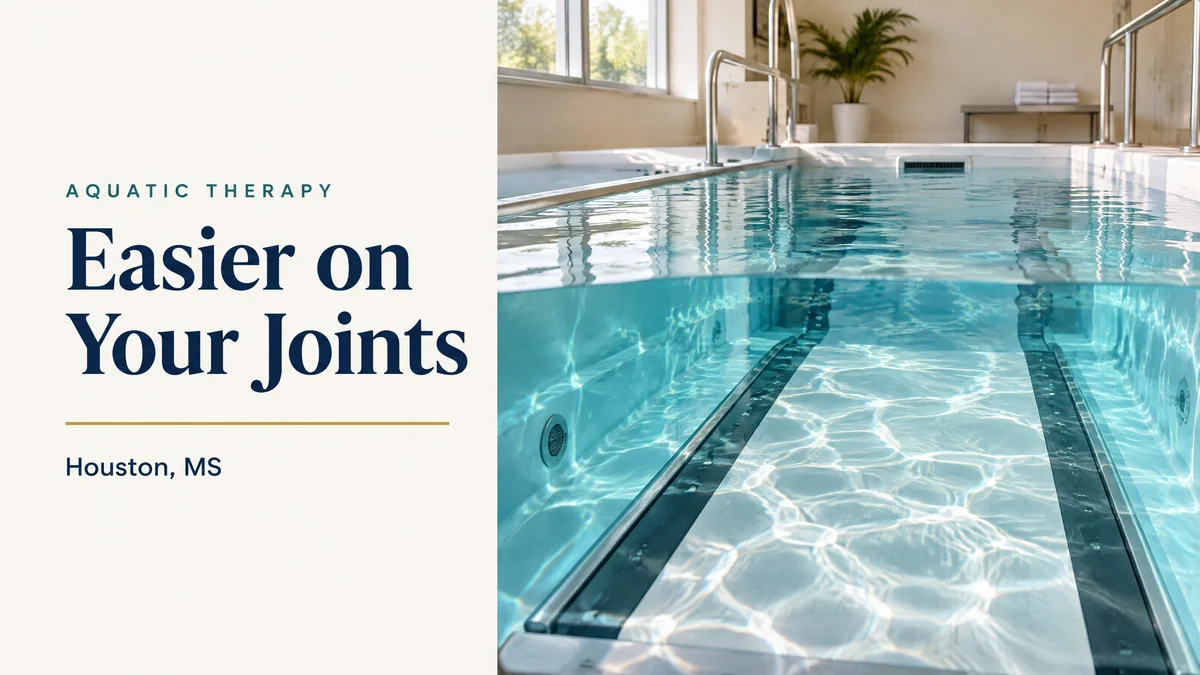
When a knee, hip, or back hurts too much to exercise on land, recovery can stall before it starts. Aquatic therapy in Houston, MS gives you another way in. Water holds up part of your body weight, so you can walk, bend, and strengthen with less load on the sore joint, and then carry those gains back onto dry ground.
At Houston Physical Therapy & Performance Center on the courthouse square, we do this in a HydroWorx EVO underwater treadmill. Here is what aquatic therapy is, why water helps, what the research honestly says, and how to tell whether it fits your recovery.
What is aquatic therapy?
Aquatic therapy is physical therapy done in water, led by a licensed therapist, using the water's buoyancy, pressure, and resistance to help you move, strengthen, and recover with less pain than the same exercise on land. It is a planned treatment with goals, not a swim or a water aerobics class.
You may also hear it called pool therapy, aquatic physical therapy, or hydrotherapy. As Cleveland Clinic notes, hydrotherapy is a broad word that covers everything from a warm bath to treatment in a special tank or pool. In a physical therapy clinic, it means structured exercise in water as one part of your plan of care.
The goal is almost always to get you back to moving well on land. The water is a bridge: a place to start moving again sooner, rebuild strength and confidence, and then step back out to keep progressing.
How does water help you heal?
Water helps in three ways: it floats part of your body weight off your joints, it presses gently on your body from every side, and it pushes back against movement, which gives your muscles a workout without weights. Together these let many people exercise with less pain than they feel on land.
- Buoyancy lifts part of your weight, which lowers the load on knees, hips, ankles, and the spine.
- Hydrostatic pressure, the even squeeze of the water, can help with swelling in joints and soft tissue.
- Resistance from the water strengthens muscles, and the faster you move, the more it pushes back.
- Warmth and support help tight muscles relax and give you more time to catch your balance.
How much weight the water takes depends on how deep you stand. In a 2015 University of Utah study in Current Orthopaedic Practice, researchers weighed 61 patients standing in a therapy pool. With water at the navel, their legs carried about 51% of their dry body weight. At chest level it was about 24%, and at the neck about 8%.
600 to 700x
How much more resistance water gives than air, which is why moving in water strengthens muscles without weights.
Source: Brown University Health, 2022
That is the core idea. If your knee hurts with your full weight on it, you can often start walking, squatting, and stepping in water at a depth where it does not, then lower the water as you get stronger.
What can aquatic therapy help?
Aquatic therapy is most often used for joint pain, recovery after surgery, back pain, and injuries where putting full weight on a leg is painful or not yet allowed. It also helps with balance and general strength in older adults. These are the problems our aquatic therapy program treats most often:
Where the water often helps
- Recovery after surgery, such as joint replacement, ACL repair, or rotator cuff repair
- Arthritis and long-term joint pain
- Low back and spine problems
- Stress fractures and overuse injuries
- Times when you are told to limit weight on a leg
- Balance problems and fall prevention
- Return-to-sport conditioning
- Strength and mobility in older adults
Johns Hopkins Medicine lists a similar group, including osteoarthritis, osteoporosis, sprains and strains, gait and balance problems, and some neurological conditions. If you are recovering from a new knee, our guide to physical therapy after knee replacement explains where the water fits into that timeline. For sore, stiff joints, see our arthritis physical therapy guide.
What is an underwater treadmill?
An underwater treadmill is a walk-in tank with a treadmill built into the floor, so you can walk or jog in water at a set depth and speed while your therapist watches how you move. Ours is a HydroWorx EVO, and it lets us change the conditions to match where you are in recovery.
| Feature | What it does for you |
|---|---|
| Underwater treadmill | Walk or run at the speed your recovery calls for, building fitness and a smoother walking pattern with less impact |
| Adjustable water depth | Sets how much weight your legs carry, from close to none up to a full functional load |
| Resistance jets | Push against you for strength, endurance, and balance training that gets harder as you improve |
| Massage jets | Help ease muscle soreness and support circulation between sessions |
Because you are walking rather than swimming, you do not need to be a swimmer. The tank's clear walls also let your therapist see how your knees, hips, and feet are moving with every step, which helps them coach you in real time.
Does aquatic therapy work?
For knee and hip arthritis, the best research shows aquatic exercise probably eases pain and improves function a little in the short term, with no serious side effects reported. It is a helpful tool, not a cure, and it works best inside a full plan.
A 2016 Cochrane review looked at trials of aquatic exercise for people with knee or hip osteoarthritis. People who finished a water exercise program rated their pain and disability about 5 points lower on a 0 to 100 scale than people who did not, and the authors rated the evidence as moderate quality. The lead author noted that, with no serious side effects and no cure for osteoarthritis, trying aquatic exercise alongside regular care may be a reasonable option.
That matches what we see. The water rarely does the whole job. What it does well is let you start moving sooner and with less pain, so you can build the strength that land exercise then carries forward.
The water lets you do today what would hurt too much on land. Our job is to use that head start well and walk you back out of the tank stronger.
How we use aquatic therapy at Houston Physical Therapy & Performance Center
What happens in an aquatic therapy session?
Aquatic therapy follows three stages: an evaluation to see where you are, guided sessions in the water that get harder as you improve, and a move back to land-based therapy when you are ready. A licensed therapist works with you through every session in the EVO.
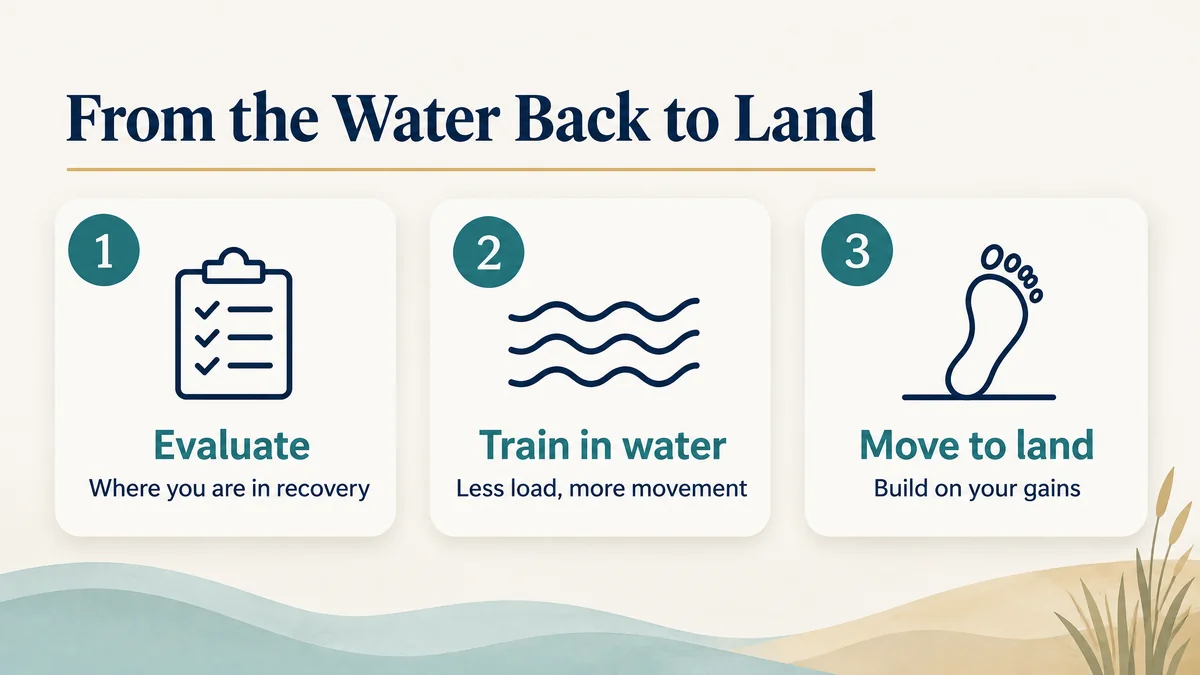
- 1Aquatic evaluation. Your therapist looks at your injury or surgery, how you move, and your goals, and decides whether the water makes sense for you right now. If it does, they design a water-based plan matched to where you are in recovery.
- 2Guided treatment in the EVO. You walk into the tank, the water fills to the depth your therapist sets, and you work through walking, strengthening, and balance exercises. As your strength and motion return, your therapist changes the depth, speed, and jets to keep you progressing.
- 3Transition to land. When you are ready, you move out of the water into regular therapy, building on the gains you made in the tank. Many people find land exercise much easier at this point because they have already rebuilt strength and confidence.
A quick tip before your first session
When you book, ask our front desk what to wear and bring for the water, and let us know if you have any of the health concerns in the next section. It saves time on the day and makes sure the session goes ahead as planned.
Who should not do aquatic therapy?
Aquatic therapy is not the right fit for everyone, and some people need to wait until a wound has healed or a medical problem is under control. Your therapist reviews your health history before you get in the water.
| Tell your therapist if | Why it matters |
|---|---|
| You have a surgical incision that has not fully healed | Water can raise the risk of infection, so you wait until your surgeon clears you to get the incision wet |
| You have an open wound, sore, or skin infection | Water therapy usually waits until the skin has healed |
| You have a heart condition that limits your activity, or heart failure that is not stable | Water changes how your heart and lungs work, so your therapist and doctor decide together |
| You have seizures that are not well controlled | Being in water raises the stakes of a seizure, so land therapy may be safer |
| You are nervous around water | We can start shallow and go slowly, or use land therapy instead |
A general guide, not a full medical screen. Talk with your doctor or therapist before starting any new treatment.
Cleveland Clinic also lists slips and falls as a risk with water therapy, which is one reason every session is supervised by a therapist. Not sure which kind of care your problem needs? Our article on when to see a physical therapist is a good place to start, and you can call us and book a first visit without a referral.
Get checked by a doctor first if you notice any of these
- Chest pain or shortness of breath with light activity: call 911
- Redness, warmth, drainage, or a fever around a surgical incision
- Joint pain with sudden swelling and fever
- Back pain with numbness in the groin or trouble controlling your bladder or bowels
Frequently asked questions
Do I need to know how to swim for aquatic therapy?
No. In our HydroWorx EVO you stand and walk on a treadmill floor inside the tank, and the water depth is set for you, so there is no swimming involved. A therapist is with you for the whole session. If being in water makes you nervous, tell us at your evaluation and we will start shallow and go at your pace.
Is aquatic therapy better than regular physical therapy?
It is not better or worse, it is a different tool. Water lets you move with less weight on sore joints, so it often helps early in recovery or when land exercise hurts too much. Most people still finish their plan with exercise on land, because daily life happens on land. Your therapist decides with you when the water helps and when to move on.
How deep is the water in the underwater treadmill?
The depth is adjustable. Your therapist raises or lowers the water to match how much weight your legs should carry, from close to no weight bearing up to nearly full load. Deeper water takes more weight off. As you get stronger, the water usually comes down so your legs gradually take on more of the work again.
How many aquatic therapy sessions will I need?
There is no set number. It depends on your condition, how you respond, and your goals. Some people use the water for a few weeks early in recovery and then move to land exercise, while others mix water and land sessions for longer. Your therapist checks your progress at each visit and adjusts the plan with you.
Do I need a referral for aquatic therapy in Mississippi?
Mississippi allows direct access to physical therapy, so most people can call us and book an evaluation without a referral. Whether the water is part of your plan is decided at that evaluation. If your care or your insurance needs a physician's order, our front desk helps you get one.

Cass Tapley, PT
Cass Tapley, PT, is the owner and physical therapist at Houston Physical Therapy & Performance Center, the only locally owned, operated, and staffed physical and occupational therapy clinic in Houston, MS, serving Chickasaw County. Reviewed by Cass Tapley, PT. Meet the team.
Too sore to exercise on land? Start in the water.
Call us or stop by the clinic on the courthouse square in Houston. You can book an evaluation without a referral, and we will tell you whether aquatic therapy fits your recovery.
Call (662) 456-1065Disclaimer: The content on this page is for informational purposes only and is not medical advice. Results vary by individual and are not guaranteed. Before starting any new treatment, diet, exercise, or supplement regimen, consult a licensed healthcare provider.