
Key Takeaways
- Tennis elbow is an overloaded forearm tendon where it attaches to the outside of the elbow. Most people who get it have never played tennis.
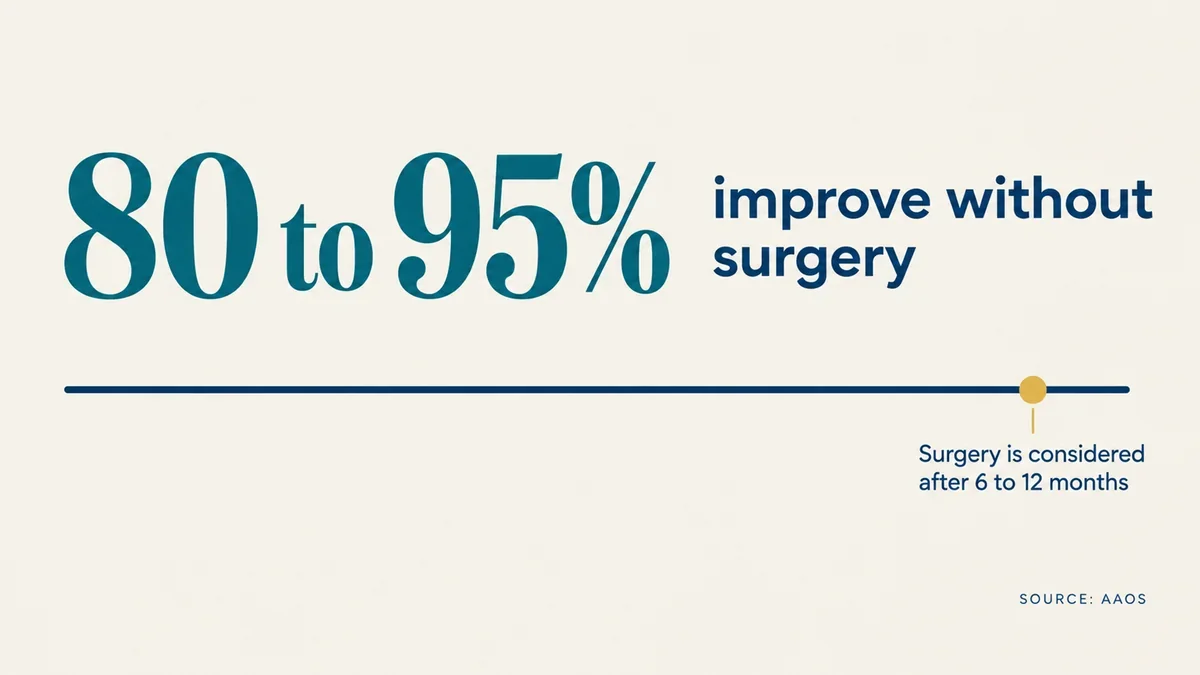
- The AAOS reports that about 80 to 95% of patients do well without surgery, which is why therapy is usually the first step.
- A good plan has three parts: ease the load, strengthen the tendon gradually, and change how you grip the tools you use every day.
- Complete rest and repeated cortisone shots tend to backfire. Swelling, numbness, or pain after a fall needs a medical look first.
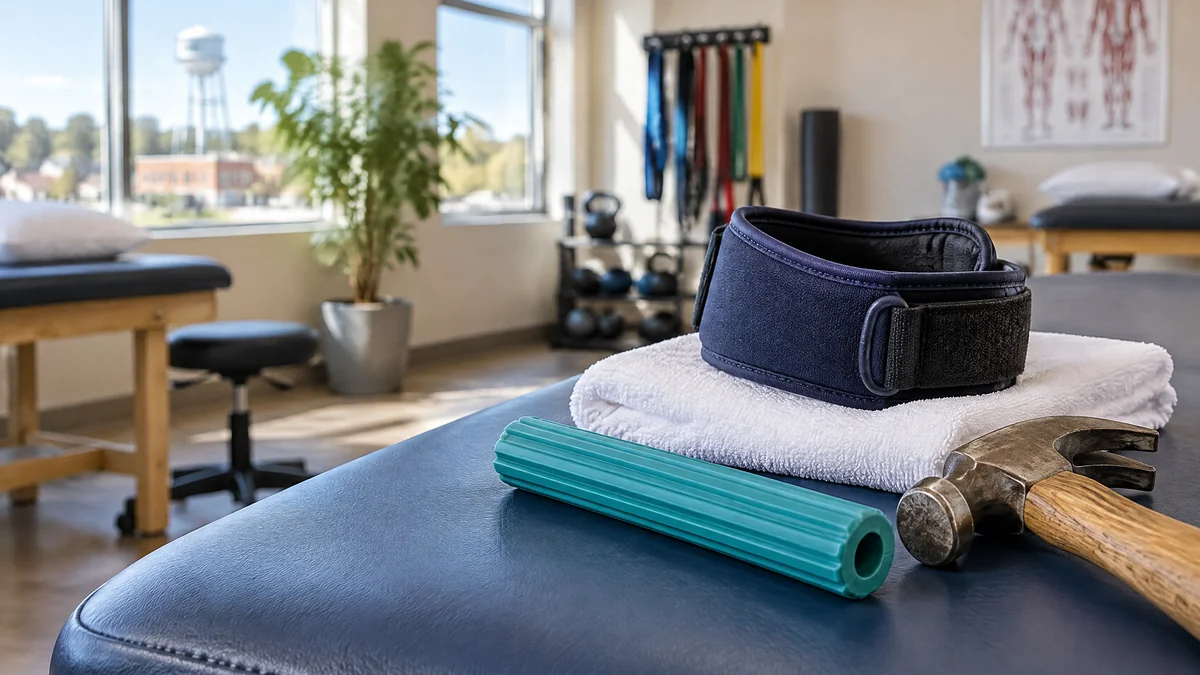
It starts as a dull ache on the outside of your elbow after a long day. Then it is there when you pick up a coffee cup, shake a hand, or turn a stubborn bolt. Tennis elbow physical therapy in Houston, MStreats the cause of that ache, a forearm tendon that has taken more load than it can handle, and for most people the answer is a smarter plan rather than an operation. We see it in carpenters, mechanics, cooks, gardeners, line workers, and office staff far more often than in tennis players, and at Houston Physical Therapy & Performance Center the approach is the same for all of them: find out what is overloading the tendon, then build it back up.
What is tennis elbow?
Tennis elbow, or lateral epicondylitis, is pain where the forearm muscles that pull your wrist back attach to the bony bump on the outside of the elbow. Repeated gripping and wrist movement creates tiny areas of damage in that tendon faster than the body can repair them. The tendon most often involved is the extensor carpi radialis brevis, which steadies your wrist every time you grip something firmly.
The name is misleading. According to the American Academy of Orthopaedic Surgeons (AAOS), most people who get tennis elbow are between 30 and 50 years old, and painters, plumbers, carpenters, auto workers, cooks, and butchers are more prone to it. It usually affects the dominant arm, and sometimes there is no clear cause at all.
It is also common. In a 2006 population study in the American Journal of Epidemiology, Shiri and colleagues found definite lateral epicondylitis in 1.3% of adults aged 30 to 64, with the highest rates between 45 and 54. In a working community like Houston and the rest of Chickasaw County, where a lot of jobs and hobbies mean gripping tools all day, that adds up to plenty of sore elbows.
What are the symptoms of tennis elbow?
The main symptom is pain or burning on the outside of the elbow that gets worse when you grip, lift, or twist with your wrist. It usually comes on gradually rather than from one injury. The AAOS notes that it can make the grip feel weak, and MedlinePlus from the National Library of Medicine describes pain that can spread from the outside of the elbow into the forearm and the back of the hand.
Signs it may be tennis elbow
- Pain on the outside of the elbow that builds over weeks
- Pain when you shake hands, lift a gallon of milk, or open a jar
- A weaker grip, or dropping things you would normally hold easily
- Pain that spreads into the forearm or the back of the hand
- Tenderness when you press on the bony bump outside the elbow
- Stiffness or an ache first thing in the morning
A simple pattern helps tell it apart: lifting with your palm facing down often hurts, while the same lift with your palm facing up tends to hurt less. That is one of several things a therapist checks, because pain on the outside of the elbow can also come from the neck or from a joint problem, and the treatment is different for each.
Does physical therapy help tennis elbow?
Yes. For most people, therapy that manages the load on the tendon and then strengthens it gradually is the main treatment for tennis elbow, and it is often enough on its own. The AAOS reports that approximately 80 to 95% of patients have success with nonsurgical treatment, and physical therapy exercises sit at the center of that care.
The honest part is that there is no single magic exercise. What helps is a plan that matches the tendon to the work you ask it to do. The research on quick fixes is a good warning. A randomized trial by Coombes and colleagues, published in JAMA in 2013, followed 165 people with tennis elbow and found that a corticosteroid injection led to worse results at one year than a placebo injection. Shots can calm the pain for a while, but they do not make the tendon stronger.
A sore tendon does not need to be babied forever. It needs the right amount of work, built up a little at a time, so it can handle your job again instead of just your couch.
How we approach tendon pain at Houston Physical Therapy & Performance Center
What does tennis elbow therapy involve?
Tennis elbow therapy starts with an evaluation of the elbow, wrist, shoulder, and neck, then combines load management, progressive strengthening, hands-on treatment, and changes to how you grip and lift. Our clinic has a Certified Hand Therapist on staff, and our hand therapy and orthopedic rehabilitation programs both handle elbow problems like this one.
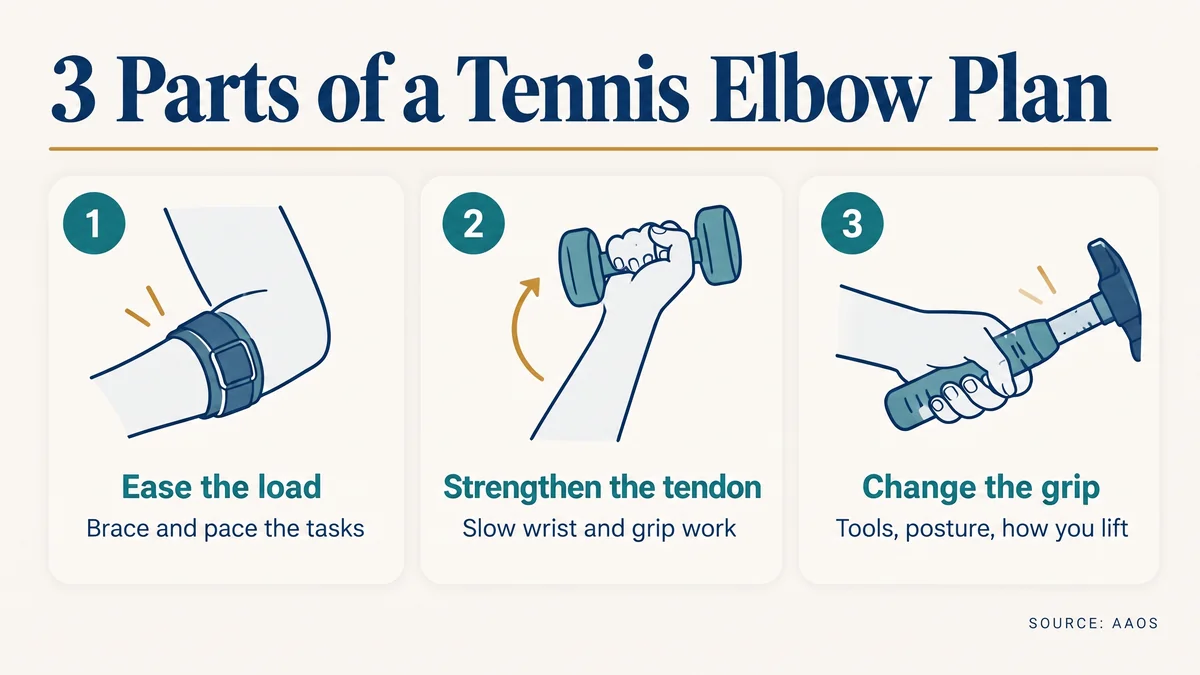
- 1Evaluation. Grip strength, the movements that hurt and the ones that do not, tenderness at the tendon, and a screen of your neck and shoulder. We also ask exactly what your hands do at work and at home, because that is where most of the overload comes from.
- 2Easing the load. Not stopping, just pacing. That might mean splitting a long task into shorter blocks, swapping which hand does the heavy gripping for a while, or wearing a counterforce strap during the jobs that flare it.
- 3Progressive strengthening. Slow, controlled wrist and grip exercises, often starting with holds and moving to lifting and lowering against light resistance, such as a flex bar or small weight. The dose goes up only as the tendon tolerates it.
- 4Hands-on care. Soft tissue work on the forearm can help calm a flare. Our therapists are trained in the Graston Technique and dry needling, and we use them when they suit your case, alongside the exercise program.
- 5Shoulder and whole-arm strength. A strong shoulder and upper back take load off the small forearm muscles. Building them helps the elbow stay calm once you are back to full work.
- 6Changing the grip. Tool handle size, wrist position, lifting with the palm up instead of down, and how long you hold any one grip. Small changes, done every day, take a lot of strain off the tendon.
If your elbow started hurting on the job, our industrial therapy team works on exactly this kind of repetitive strain, including at the Franklin MFG onsite clinic in Houston. For athletes and weekend players, our sports therapy program adds the return-to-sport testing that tells us when the arm is ready for a full swing again.
Should you rest tennis elbow or keep using it?
Short-term relief from the task that flares it helps, but complete rest usually does not, because a tendon that does nothing gets weaker and flares again when you go back to work. MedlinePlus suggests resting the arm for 2 or 3 weeks and avoiding or changing the activity that causes symptoms as a first step. From there, the goal is to bring load back in a measured way.
Here is how the common options compare. Most people start at the top of this table, and only a small number ever need the bottom row.
| Option | What it does | Worth knowing |
|---|---|---|
| Physical therapy and exercise | Builds tendon strength and changes the habits that overload it | First line for most people, no downtime |
| Counterforce strap | Can ease symptoms during gripping tasks | Helps most as part of a plan, not on its own |
| Corticosteroid injection | May reduce pain in the short term | Given by a physician; one large trial found worse results at one year |
| Surgery | Removes or repairs the damaged tendon tissue | Considered after 6 to 12 months of nonsurgical care that has not worked |
A general guide, not a recommendation for your elbow. Your therapist and physician decide this with you.
How long does tennis elbow take to heal?
Tennis elbow is often slow to settle, and the timeline depends on how long the tendon has been overloaded and how much of your day keeps loading it. There is no honest single number. What we can say is that the outlook is good: the AAOS reports that most patients improve without surgery, and surgery is usually considered only after 6 to 12 months of nonsurgical treatment has not helped.
A few things tend to make the road longer: waiting months before doing anything, pushing through sharp pain every day, stopping the exercises as soon as the elbow feels better, and going back to the same grip on the same tool. A few things tend to make it smoother: starting early, sticking with a progressive home program, and fixing the task that started it. Your therapist rechecks your grip strength and pain at each visit so the plan changes if progress stalls.
A quick tip while you wait for your first visit
Try lifting everyday things with your palm facing up rather than down, and use both hands for heavier items like a full skillet or a bag of feed. It will not fix the tendon, but it often takes the edge off while you get a proper plan in place.
When elbow pain is not tennis elbow
Not every sore elbow is tennis elbow. Pain on the inside of the elbow is more likely golfer's elbow, a pinched nerve in the neck can send pain and tingling down the arm, and numbness in the thumb and first fingers points toward the wrist instead. Our guides to neck pain physical therapy and carpal tunnel physical therapy cover those sides of the picture.
See a physician promptly if you notice any of these
- Pain that started with a fall or a hard blow to the elbow
- Swelling, warmth, or redness around the joint, or a fever
- An elbow you cannot fully bend or straighten
- Numbness or tingling in the hand, or a hand that is getting weaker
- Chest pain or pressure with arm pain: call 911
None of these rule out therapy. They mean a medical check comes first, so the plan matches what is really going on.
Frequently asked questions
Can physical therapy fix tennis elbow?
For most people, a therapist-led program of load management, progressive forearm strengthening, and grip changes can ease tennis elbow and help the tendon tolerate work again. The American Academy of Orthopaedic Surgeons reports that about 80 to 95% of patients do well with nonsurgical treatment. Results vary, and a stubborn case may still need a physician to weigh other options.
Do I need a referral for tennis elbow therapy in Mississippi?
No. Mississippi allows direct access to physical therapy, so you can book an evaluation for elbow pain without a physician referral. If your insurance plan asks for one, our front desk helps you sort that out before your first visit so there are no surprises.
Should I stop using my arm completely if I have tennis elbow?
Usually not. Short-term rest from the task that flares it can calm things down, but complete rest tends to leave the tendon weaker, so the pain comes back when you return to work. Most plans reduce the aggravating load, then build it back up gradually with strengthening the tendon can handle.
Is a tennis elbow strap worth wearing?
A counterforce strap worn just below the elbow can ease symptoms for some people during gripping tasks, and the AAOS lists it as one nonsurgical option. It works best as part of a plan, not on its own. Your therapist can check the fit and placement and tell you which tasks justify it.
Is a cortisone shot better than therapy for tennis elbow?
An injection may calm pain in the short term, but a 2013 randomized trial in JAMA found that people given a corticosteroid injection had worse results at one year than those given a placebo injection. That is why many clinicians try exercise-based care first. The decision about an injection belongs to you and your physician.

Cass Tapley, PT
Cass Tapley, PT, is the owner and physical therapist at Houston Physical Therapy & Performance Center, the only locally owned, operated, and staffed physical and occupational therapy clinic in Houston, MS, serving Chickasaw County. Meet the team.
Pick up your coffee, your tools, and your grandkids without wincing.
Call us today or visit us on the courthouse square in Houston. No referral is required to start physical therapy in Mississippi.
Call (662) 456-1065Disclaimer: The content on this page is for informational purposes only and is not medical advice. Results vary by individual and are not guaranteed. Before starting any new treatment, diet, exercise, or supplement regimen, consult a licensed healthcare provider.